
Short answer: no, a professional teeth cleaning (scaling) does not damage healthy teeth. It removes hard tartar that brushing can't, which is what causes bleeding gums, bad breath and, over time, loose teeth. The gaps or sensitivity some people notice afterwards were usually hidden under the tartar, and the sensitivity settles in a few days.
What is scaling?
Plaque is the soft, sticky layer of bacteria that forms on teeth every day. Brushing removes it. Plaque that stays on the teeth hardens into tartar (calculus), a yellow or brown crust, usually behind the lower front teeth and along the gum line. Once it hardens, no toothbrush can remove it.
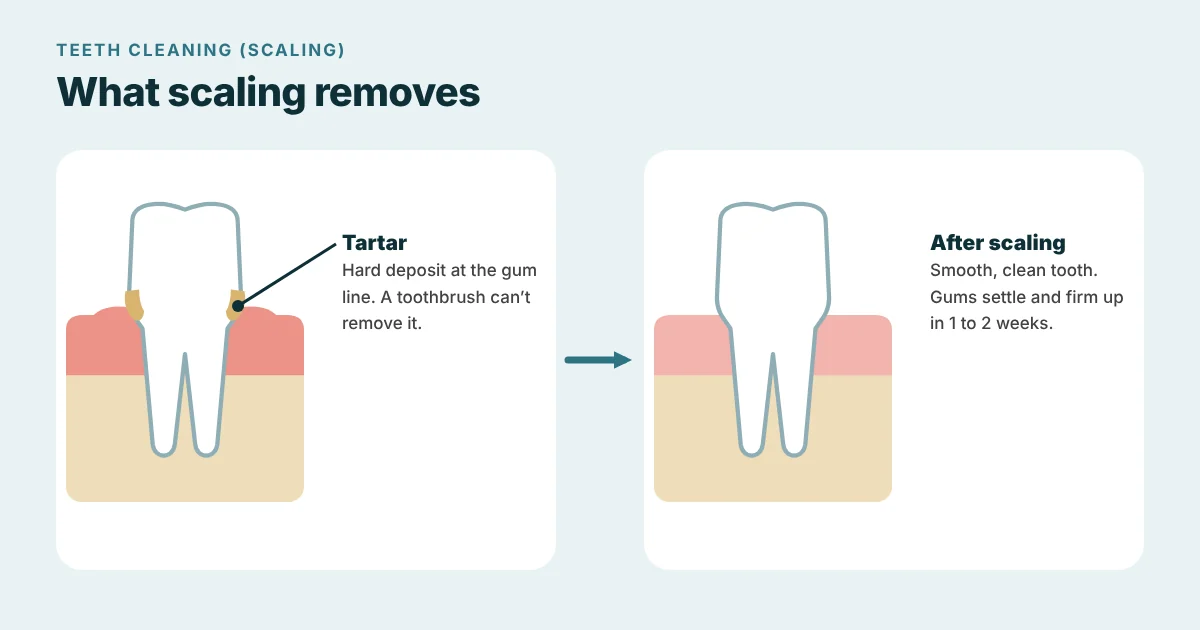
Scaling is how a dentist removes tartar, using an ultrasonic scaler (a fine tip that vibrates and sprays water) and hand instruments. After scaling, the teeth are usually polished to make the surface smooth, so plaque sticks less.
When tartar has gone below the gum line, a deep cleaning (root planing) may be needed. It cleans and smooths the root surfaces under the gum, usually with the area numbed, and is often done in two or more sittings.
Myth 1: "Scaling se daant hil jaate hain" (scaling makes teeth loose)
This is the most common fear, and it gets cause and effect the wrong way round. Tartar and the gum infection it causes are what slowly destroy the bone holding the teeth. Sometimes the tartar has become so thick that it acts like a splint, holding loose teeth together. When it is removed, you may notice movement that was already there. Scaling doesn't create the looseness; it removes the cause and gives the gums a chance to tighten up.
Myth 2: "Scaling creates gaps between teeth"
The spaces were there before. They were filled with tartar and swollen gum. After cleaning, the swelling settles over a few days and the gums shrink back to a healthy shape, so the real spaces become visible. Healthy, tight gums are a good sign, even if it takes a little getting used to.
Myth 3: "Scaling removes enamel and makes teeth thin"
Scaling instruments are designed to remove tartar, not tooth. Done properly and at sensible intervals, scaling does not thin your enamel. A smooth, polished tooth surface actually makes it harder for new plaque to stick.
Myth 4: "My teeth will be sensitive forever"
Some sensitivity to cold for a few days is common, especially if there was a lot of tartar or the roots were exposed. It usually settles within a week or two. A toothpaste for sensitive teeth helps meanwhile. If sensitivity lasts longer, tell your dentist; it may point to a separate problem, such as a cavity or gum recession.
Myth 5: "Scaling is a one-time thing" or "Scaling is the same as whitening"
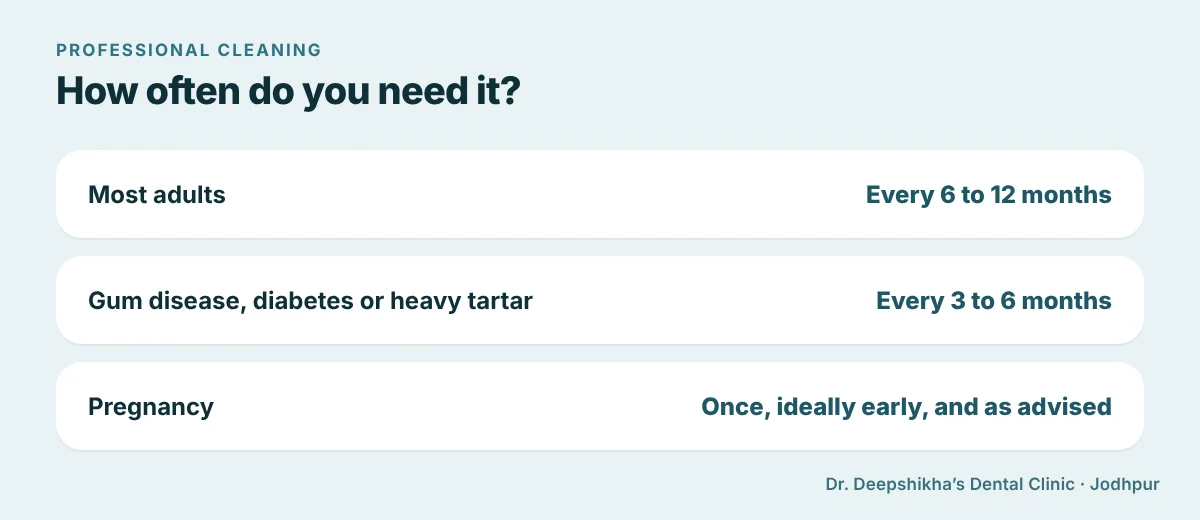
Tartar forms again, more quickly in some people than others. Most adults need a professional cleaning every 6 to 12 months, and people with gum disease, diabetes or heavy tartar may need it more often. Your dentist will advise you.
Scaling also isn't whitening. It removes tartar and surface stains from tea, coffee and tobacco, which often makes teeth look noticeably cleaner and brighter. But it doesn't change the natural colour of the tooth. That is what whitening does. Stains that have been there since childhood may be fluorosis, which our article on fluoride stains in Rajasthan explains.
Myth 6: "If my gums bleed, I should stop brushing there"
Bleeding gums are inflamed gums, and the cure is cleaning, not avoiding the area. Keep brushing gently. If the bleeding doesn't stop within a couple of weeks of good brushing, you probably have tartar that only a dentist can remove.
What scaling feels like

| Question | What to expect |
|---|---|
| Does it hurt? | Most people feel vibration, scraping and cold water, not pain. With deep tartar or sore gums, the dentist can numb the area |
| How long does it take? | Usually one visit. Heavy tartar or gum disease may need two or more |
| Will my gums bleed? | A little bleeding during and just after is normal if the gums were inflamed |
| After the cleaning | Mild sensitivity for a few days; gums firm up over 1 to 2 weeks |
Before you come: tell the dentist if you take blood thinners (such as aspirin or clopidogrel), have diabetes or a heart condition, or are pregnant. Don't stop any medicine on your own; your dentist will plan around it. Cleaning is safe in pregnancy, and our article on dental treatment during pregnancy explains why.
Signs you need a cleaning
- gums that bleed when you brush
- bad breath that doesn't go away with brushing
- yellow or brown deposits behind the lower front teeth
- stains from tea, coffee, gutkha or smoking
- it has been more than a year since your last cleaning
When to see a dentist
- Same day: a swelling on the gum or pus.
- Within a week or two: bleeding gums, bad breath, or teeth that feel loose.
- Routine: a check-up and cleaning every 6 to 12 months, or as your dentist advises.
You can read more about scaling and cleaning at our clinic, and about bleeding gums if that's what brought you here. If you have diabetes, read why diabetics need extra gum care.
If it's been a while since your last cleaning, you can book one in Jodhpur on WhatsApp.
Sources: NHS: Gum disease treatment, NHS: Gum disease
This article is general information to help you understand your options. It is not a diagnosis. Every mouth is different, so please see a dentist for advice about your own teeth.