
Short answer: routine dental check-ups, cleaning and most treatments, including fillings, root canals and extractions when needed, are safe at any stage of pregnancy. Dental X-rays are safe too when needed, as the dose to the baby is tiny and a lead apron is used. Leaving a tooth infection untreated is the bigger risk for mother and baby.
"Ghar ke bade kehte hain, delivery ke baad karwana"
In many Indian families, elders advise waiting until after delivery for any dental work. It comes from care, but it is outdated. Health services that advise pregnant women, such as MotherSafe in Australia, are clear that dental care can be done throughout pregnancy, and that untreated dental problems can have consequences for both mother and baby.
Another common belief is that "har bachche par ek daant jaata hai", that every pregnancy costs a tooth. Pregnancy does not take calcium out of your teeth. What does happen is that gums become more sensitive and the mouth is harder to keep clean, so problems that are ignored for nine months can end in a lost tooth. With care, that doesn't need to happen.
Why your mouth changes in pregnancy
- Gums bleed more easily. Hormonal changes make the gums more likely to become red, swollen and inflamed. This is often called pregnancy gingivitis.
- A lump on the gum. Some women develop a soft, red swelling on the gum between two teeth, sometimes called a "pregnancy tumour" (pregnancy epulis). Despite the name, it is not cancer. It is harmless and often shrinks after delivery, but show it to your dentist.
- Vomiting softens enamel. Frequent morning sickness brings stomach acid into the mouth, which can wear the teeth over time.
- Eating patterns change. Cravings for sweets, or sour things like imli and achaar, and eating small meals often, give bacteria more chances to cause decay.
- Tiredness. Brushing at night often gets skipped, especially in the first and last months.
Some studies have linked severe gum disease with premature birth and low birth weight. The evidence is not conclusive, but it is one more reason to keep your gums healthy.
What is safe, and when
| Treatment | Safe in pregnancy? |
|---|---|
| Check-up and cleaning (scaling) | Yes, at any stage |
| Fillings | Yes, when needed |
| Root canal or extraction for pain or infection | Yes. Don't delay treatment for an infection |
| Dental X-ray | Yes, when needed, with a lead apron. The dose to the baby is considered insignificant |
| Local anaesthetic (numbing injection) | Yes. The usual dental anaesthetic (lignocaine) acts locally and is not linked to pregnancy problems |
| Teeth whitening and cosmetic work | Usually postponed until after delivery, as it is not urgent |
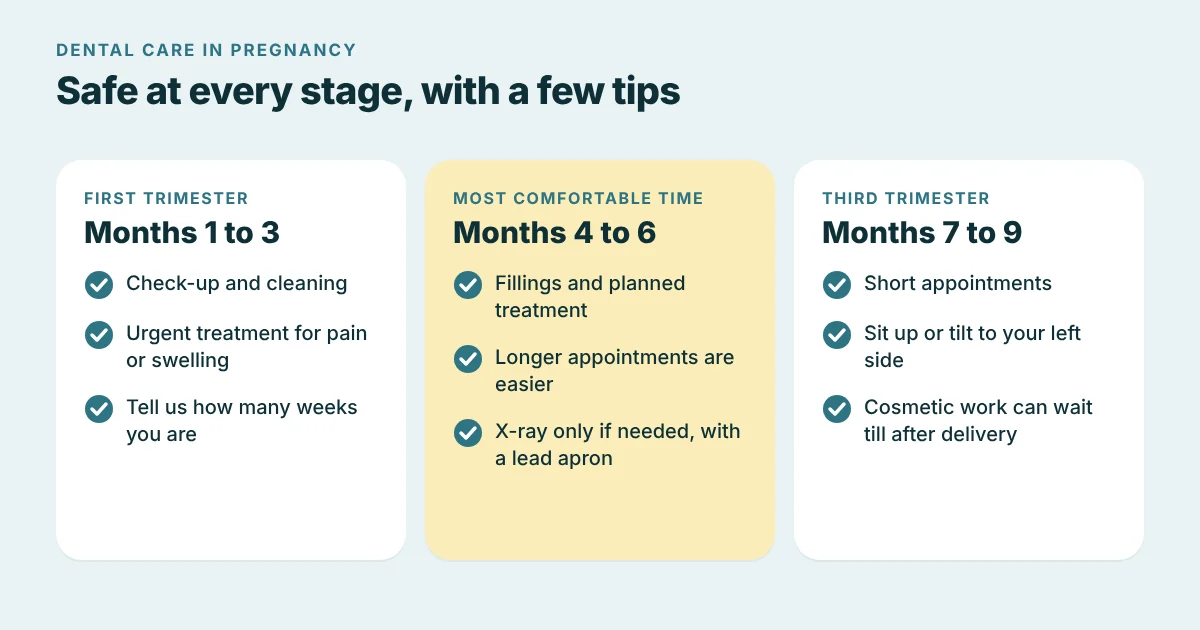
Many women find the middle months (about the 4th to 6th month) the most comfortable time for longer appointments: morning sickness has often settled, and lying back in the chair is still easy. But a dental problem that needs attention should be treated whenever it happens.
In the last three months, lying flat on your back for long can make you feel dizzy or breathless. Ask for shorter appointments, sit more upright, or tilt slightly onto your left side. Tell the dentist straight away if you feel unwell in the chair.
Medicines: don't self-medicate
Please don't take painkillers or antibiotics from the chemist on your own. Some common medicines are not advised in pregnancy, for example painkillers like ibuprofen, especially in the later months, and certain antibiotics such as the tetracycline group. Your dentist will choose medicines that are safe for you and your baby, and may check with your gynaecologist.
Tell your dentist and your gynaecologist
- Tell your dentist that you are pregnant, how many weeks, and about any medicines or supplements you take.
- If you have high blood pressure, diabetes in pregnancy, or any complications, mention it.
- Your dentist may coordinate with your gynaecologist, especially before prescribing any medicine.
Looking after your teeth at home
- Brush twice a day with a fluoride toothpaste, and don't skip the night brush.
- Clean between the teeth once a day with floss or interdental brushes, as gums bleed most there.
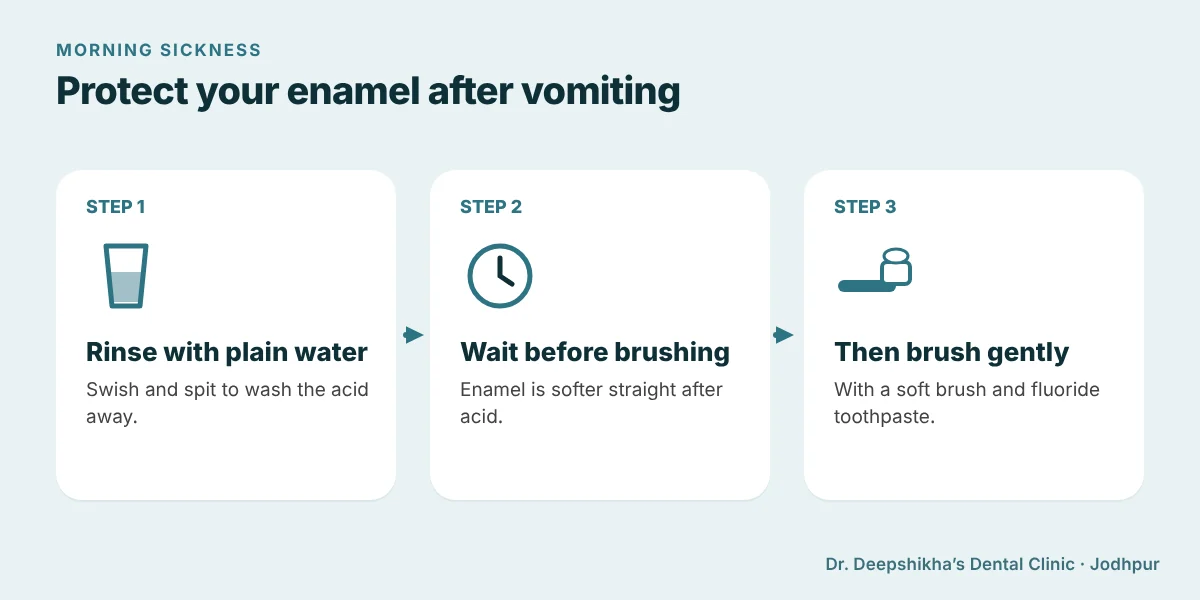
- After vomiting, rinse with plain water and wait a while before brushing, because the enamel is softer straight after acid.
- If brushing makes you gag, use a small, soft brush and a mild-flavoured toothpaste, and brush slowly.
- Keep sweets and sour snacks to mealtimes rather than all day.
After the baby is born
Dental treatment, including local anaesthetic and most common dental medicines, is also safe while breastfeeding. Just tell your dentist you are feeding your baby. And once your baby's first tooth appears, it's time for their first check-up too: our guide to your child's first dental visit explains what to expect.
When to see a dentist
- Same day: swelling of the face or gum, severe toothache, or fever with tooth pain. An infection should not wait for the delivery date.
- Within a week or two: gums that bleed a lot or a lump on the gum.
- Routine: once in pregnancy for a check-up and cleaning, ideally early, even if nothing hurts.
If your gums bleed, our page on bleeding gums explains the causes, and a gentle cleaning is safe and often all that is needed. Our article on teeth cleaning myths answers the usual worries about scaling.
If you're expecting and want a check-up in Jodhpur, you can book on WhatsApp. Just tell us how many weeks along you are.
Sources: MotherSafe, NSW Health: Dental care in pregnancy and breastfeeding, NHS: Bleeding gums in pregnancy
This article is general information to help you understand your options. It is not a diagnosis. Every mouth is different, so please see a dentist for advice about your own teeth.