
Short answer: if you have diabetes, you are more likely to get gum disease, and it tends to be more severe and slower to heal. It also works the other way: gum disease can make your blood sugar harder to control, and treating it can bring your HbA1c down a little. Get a dental check-up at least once a year, tell your dentist you are diabetic, and don't ignore bleeding gums.
Why this matters so much in India
The ICMR-INDIAB study, published in 2023, estimated that about 101 million people in India (11.4%) have diabetes, and another 136 million have prediabetes. Many people know about the risks to the eyes, kidneys and feet. Very few are told about the gums, even though gum disease is one of the most common problems diabetics face.
In Hindi, advanced gum disease is often called pyorrhea: gums that bleed, swell, smell and slowly pull away, until the teeth become loose.
How diabetes affects your mouth
- Gum disease is more likely and more severe. High blood sugar weakens the body's response to the bacteria around your teeth, so gum infection spreads faster and heals more slowly.
- More sugar in your saliva. When blood sugar is high, sugar in the saliva is high too, which feeds the bacteria that cause decay.
- Dry mouth. Many diabetics have less saliva, which makes decay and gum problems more likely.
- Fungal infections. White, creamy patches that wipe off (oral thrush) and cracks at the corners of the mouth are more common when sugar is high.
- Slower healing after extractions or other dental treatment when sugar is poorly controlled.
The two-way link
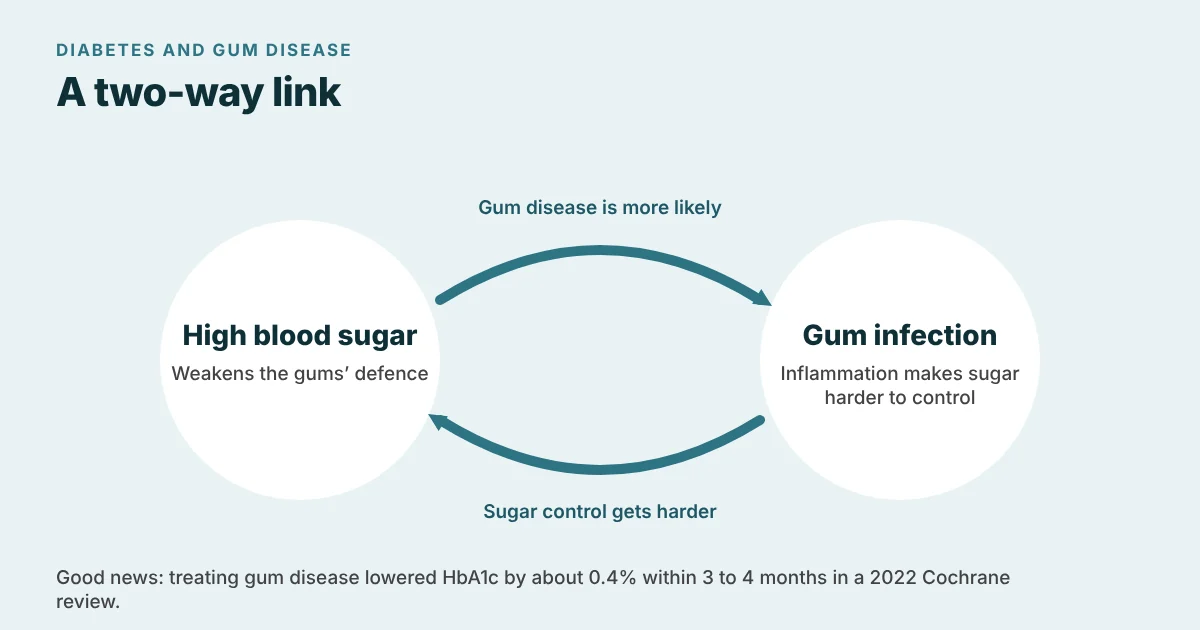
Gum disease is an ongoing infection and inflammation in the mouth. That inflammation can make it harder for the body to control blood sugar. This is why doctors and dentists now see gum care as part of managing diabetes, not something separate.
The evidence is encouraging. A 2022 Cochrane review, which pooled 30 studies, found that treating gum disease lowered HbA1c by about 0.4% within 3 to 4 months, compared with no treatment. That is a modest change, but a real one, and it comes alongside healthier gums and fresher breath.
Warning signs to watch for
| Sign | What it may mean |
|---|---|
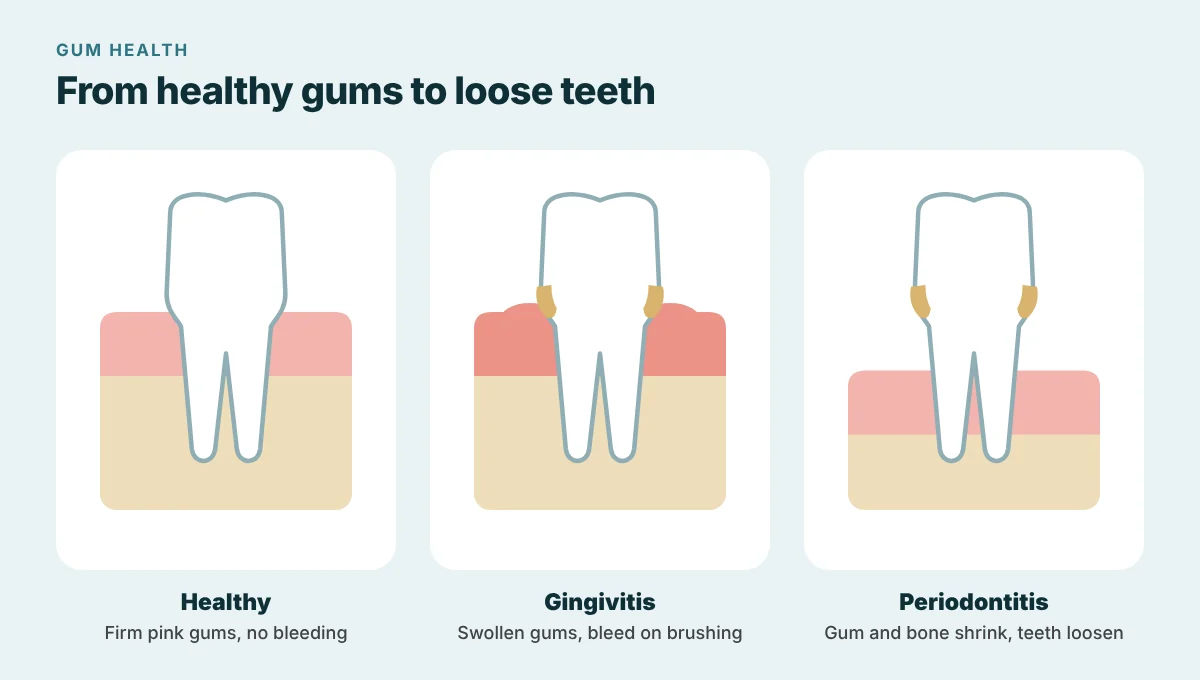
| Gums bleed when brushing | Early gum disease (gingivitis). Very treatable at this stage |
| Red, swollen or tender gums | Active gum inflammation |
| Bad breath that won't go away | Bacteria and tartar under the gums |
| Gums pulling back, teeth look longer | Bone and gum loss (periodontitis) |
| Teeth feel loose or are shifting | Advanced gum disease. See a dentist soon |
| Pus between teeth and gums, or a gum swelling | Gum abscess. See a dentist the same day |
| Dry, burning mouth | Low saliva, which raises the risk of decay |
Bleeding gums are often ignored because they don't hurt. In a diabetic, they are worth acting on early.
What to do
- Tell your dentist you have diabetes, and bring your latest sugar reports (HbA1c) and medicine list.
- Get a check-up and cleaning at least once a year, or as often as your dentist advises. Many diabetics with gum disease need cleaning every 3 to 6 months.
- Brush twice a day with fluoride toothpaste, and clean between your teeth once a day.
- Keep your sugar under control. Good control helps your gums heal, and healthier gums help your control.
- Stop smoking, gutkha and khaini. Tobacco raises gum disease risk and makes diabetes worse.
- Limit sugary chai and sweets between meals, and drink water if your mouth feels dry.
Before dental treatment
- Eat and take your medicines as usual before the appointment, unless your doctor says otherwise. Morning appointments often work best.
- If you take insulin or tablets that can cause low sugar, carry glucose or a sweet snack, and tell the dentist straight away if you feel shaky, sweaty or dizzy.
- For extractions, implants or gum surgery, your dentist will want to know your recent HbA1c, as healing is better when sugar is well controlled. Implants can work well in people whose diabetes is well controlled.
When to see a dentist
- Same day: a swelling on the gum or face, pus, or severe pain.
- Within a week or two: gums that bleed regularly, teeth that feel loose, or bad breath that won't go away.
- Routine: a check-up at least once a year if you are diabetic, even if nothing hurts.
Our pages on bleeding gums and gum treatment explain what's involved, from a simple scaling to deeper cleaning under the gums. If you've been putting off a cleaning, our article on teeth cleaning myths answers the usual worries.
If you're diabetic and haven't had your gums checked in a while, you can book a check-up in Jodhpur on WhatsApp.
Sources: CDC: Diabetes and oral health, National Medical Journal of India: ICMR-INDIAB diabetes data, Cochrane: Treating gum disease to control blood sugar in people with diabetes (2022)
This article is general information to help you understand your options. It is not a diagnosis. Every mouth is different, so please see a dentist for advice about your own teeth.